

AI Readiness and Partnership Priorities in Türkiye
In conversation with UN Resident Coordinator Babatunde A. Ahonsi
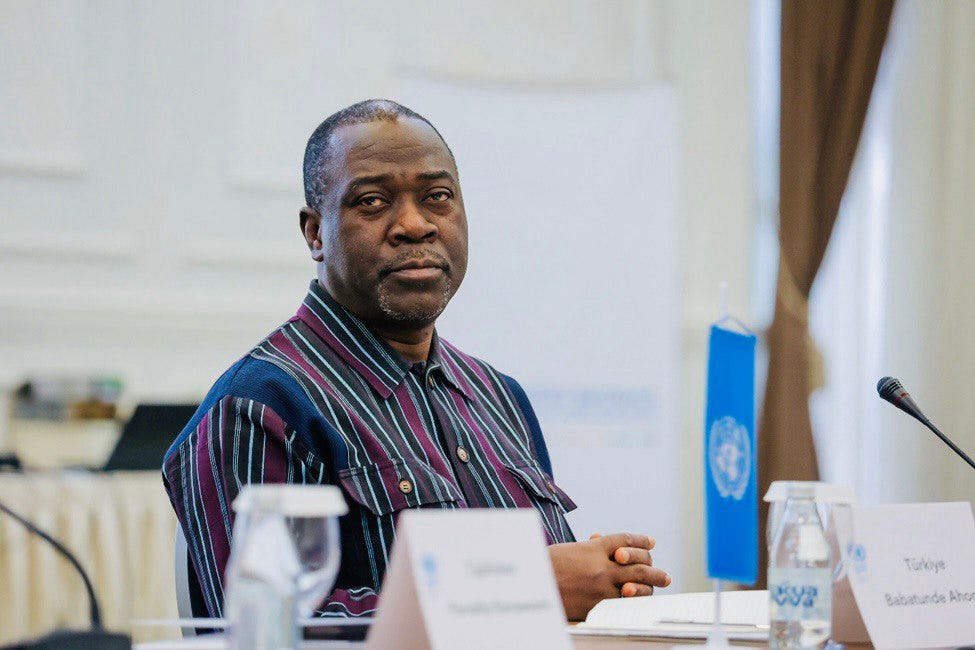
Photo: Babatunde A. Ahonsi
Editor’s Note
Artificial intelligence is no longer just a technology issue; it is a strategic one. Governments everywhere are facing the pressure to build national AI capabilities while safeguarding sovereignty and human rights. Türkiye is no exception. With its National Artificial Intelligence Strategy, the country has set ambitious goals: raising AI’s contribution to GDP to 5 percent, creating 50,000 new jobs in the sector, and ranking among the top 20 countries on global AI indexes by 2025. Yet success will depend on more than vision. In this issue, Techplomacy Magazine speaks with Babatunde A. Ahonsi, UN Resident Coordinator in Türkiye, about the country’s progress, its gaps, and how the UN is helping shape a responsible path forward.
Olin Thakur, Editor-in-Chief, Techplomacy Magazine
Türkiye’s National AI Strategy (NAIS) reflects a desire not just to adopt artificial intelligence, but to embed it across the economy and public services in a way that is globally competitive and nationally accountable. Six strategic priorities define the plan: training experts, supporting research and entrepreneurship, improving data quality and access, creating regulations to accelerate socioeconomic adaptation, strengthening international cooperation, and managing structural and workforce transformation. By 2025, the government aims to deliver 24 objectives and 119 measures that align with its broader “Digital Türkiye” and “National Technology Move.”
For Babatunde Ahonsi, this vision is inspiring but still tenuous, requiring careful implementation to realize its full potential. “Türkiye’s strategic vision for AI is clear and ambitious. The most significant gap appears to be in the operational capacity for robust and ethical governance,” he explained. While principles such as fairness and transparency are enshrined in the national strategy, turning them into daily practice is another matter. “Particularly for high-risk AI systems, operational safeguards are not yet consistent.”
The UN has not yet carried out a full readiness assessment in Türkiye, but Ahonsi believes one is overdue. He sees strong value in applying UNESCO and UNDP methodologies to map progress, identify weak points, and provide a structured baseline for government and industry.
Looking ahead to the next two years, Ahonsi highlighted three concrete areas where the UN can help accelerate responsible adoption. The first is developing Responsible AI in Public Procurement Guidelines, so that the government’s purchasing power is used to shape the market in line with ethical standards. The second is creating a Civil Service AI Literacy Program, adapted from UNESCO’s framework, to build human capacity across government. The third is supporting the design of early interoperable pilots that can scale within ministries and municipalities.
Türkiye’s decision to align with the EU AI Act is another cornerstone. For Ahonsi, this should not be seen as a zero-sum choice between Europe and its eastern neighbors. “It is an opportunity for Türkiye to leverage its position to become a regional standard-setter,” he argued. To that end, the UN is prepared to provide technical assistance for harmonization with the EU law while also helping the country convene a Regional AI Governance Dialogue with partners in the Caucasus and Central Asia. Such a forum, he suggested, would allow Türkiye to showcase its experience while promoting interoperable, rights-based frameworks in a region where standards are still emerging.
Data sits at the heart of the strategy. NAIS calls for secure data sharing through a new Public Data Space, expansion of anonymized datasets via the Open Government Data Portal, and the creation of a National Data Dictionary. Ahonsi fully supports this direction. “Effective data governance is the bedrock of a trustworthy AI ecosystem,” he said. The UN is ready to work with the DTO and the Turkish Statistical Institute (TurkStat) on a national FAIR data framework to improve openness while protecting privacy.
On infrastructure, Türkiye’s approach is intentionally hybrid. Sovereign computing resources are being reserved for sensitive tasks, while university clusters will take the lead on model adaptation and research. Global cloud providers remain part of the mix, especially for commercial and cross-border projects. Ahonsi views this balanced model as both pragmatic and protective. “The most effective path is not a binary choice,” he observed.
Inclusion is another critical theme. Türkiye’s strategy calls for spreading benefits to Anatolian provinces, expanding digital agriculture, and supporting workforce reskilling. For refugees and minorities, targeted interventions will be key. “AI can be a powerful leapfrogging mechanism for service delivery and bridging gaps,” Ahonsi noted. Recent examples include the AI for Good Innovation Factory Türkiye, organized with the International Telecommunication Union, and Digital Technologies for Agriculture, which showcased smart irrigation, traceability, and e-commerce solutions. For refugees, UNHCR is piloting AI tools to cut delays in status determination by spotting inefficiencies in asylum processing.
Yet technology brings risks alongside opportunities. Türkiye’s regional position makes questions of surveillance, misinformation, and dual-use applications particularly pressing. Ahonsi is clear: “Mitigating dual-use risks requires building strong democratic firewalls to prevent the repurposing of technology for uses that may erode civil liberties.” He advocates for a legal mandate requiring independent human rights impact audits for all high-risk AI systems, especially in policing and justice.
The government’s National AI strategy also emphasizes structural transformation of the workforce. By 2025, Türkiye aims to train 10,000 graduate-level AI specialists, expand certification programs for new professions, and support organizational adoption of AI through tools like an AI Maturity Model and a Public AI Platform. Ahonsi linked these efforts directly to economic goals. “Türkiye is seeking not only to innovate but to ensure that its institutions and workforce can adapt at the right pace,” he said.
Cultural heritage protection, often overlooked in AI discussions, is another area where the UN sees potential. With Türkiye home to sites of global significance, cross-border sensitivities are inevitable. “Technology can act as a powerful neutral witness,” Ahonsi explained. He pointed to UNESCO’s Dive into Heritage initiative, which uses digital tools to document and safeguard heritage, as a model for reducing disputes and shifting conversations toward evidence-based preservation.
International partnerships will also be decisive. Instead of traditional aid, Ahonsi called for strategic co-investment. Concessional compute access, time-limited research licenses, and targeted capacity grants could help Türkiye advance its own sovereign AI capabilities while still benefiting from global expertise. The UN, he emphasized, is ready to play its role as a convener to bring such partnerships together.
Finally, transparency will determine trust. Türkiye’s strategy already includes regular evaluation and adaptation, but Ahonsi argued for a public-facing layer. “Public reporting is a powerful catalyst for building trust,” he said. The UN is prepared to facilitate the co-development of a national AI Readiness Report, aligned with frameworks like UNESCO RAM, UNDP AILA, and the Stanford AI Index, to provide regular updates that can be compared internationally.
By 2025, Türkiye hopes to meet ambitious benchmarks: boosting AI’s GDP contribution, expanding employment to 50,000, prioritizing local applications in public procurement, and ranking in the top 20 of global AI indexes. Ahonsi believes these goals are within reach if governance, inclusion, and transparency remain central. “The challenge is less about ambition than about building the operational, ethical, and inclusive systems that turn strategy into lived progress,” he concluded.
The views expressed in this article are those of the author(s) or interviewee(s) and do not necessarily reflect the views of Techplomacy Magazine or the Techplomacy Foundation. Articles may be republished in full, without alteration, with credit to Techplomacy Magazine (techplomacyfoundation.org).
Series: Techplomacy Conversations™